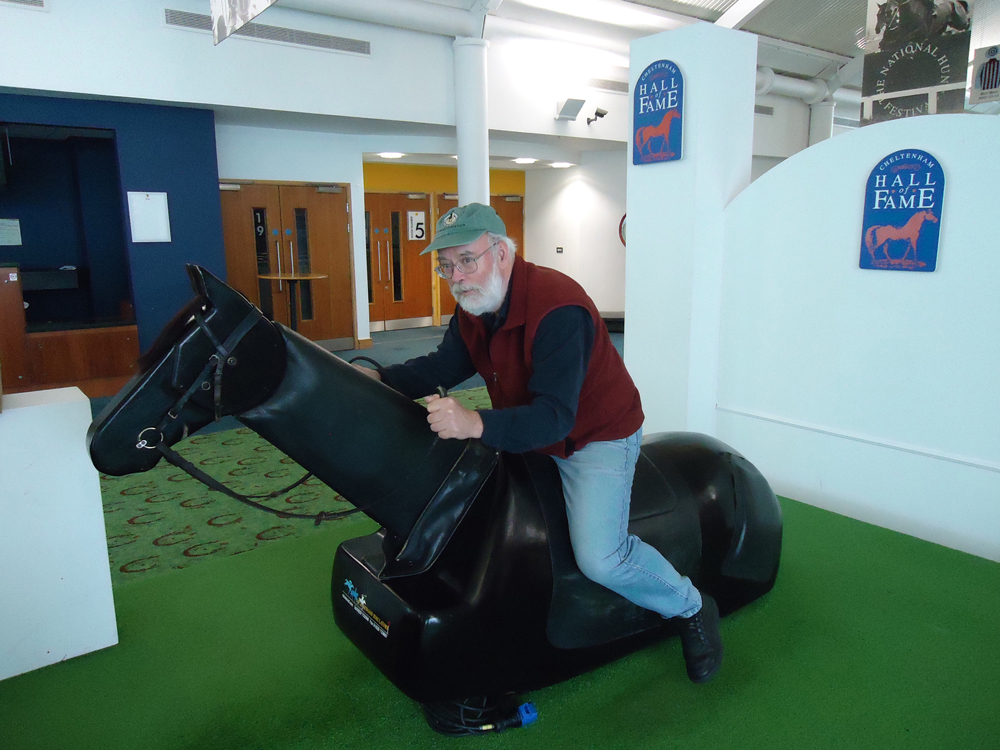
Rob Stephenson at Cheltenham.
With lodging rooms either side of a late-medieval hall, the building was in use as an inn by 1478. The New Inn today retains its open hall, once a communal point for weary travelers and those who lived here.This is what the Landmark Trust handbook has to say:
• Dogs
• Allowed Fire or Stove
• Logs available
• Bath
• Outside Dining Furniture
• Cot
• Open Space
• Parking available
• Dishwasher
• Microwave
Handsome 15th century inn.
Built in 1478, New Inn bucked the general trend at the time whereby abbeys and monasteries tended to service the needs of the weary traveler. On first inspection New Inn looks like any other run of the mill 15/16th century house of a well-to-do merchant. With its central open hall, family rooms at one end and other service rooms at the other, New Inn appears to be unremarkable amongst its contemporaries. However, unlike otherhomes, New Inn featured extended accommodation. In order to provide enough space for guests and the family, it also boasted a large cellar that would have served to brew and store ale. A spacious communal hall welcomes all
Once upon a time New Inn would have welcomed many different guests that strayed through Peasenhall. Today it offers the same warm and extended welcome for those that stay here, accommodating up to eight people in comfort. The main hall is undeniably its defining feature. The medieval hall has underfloor heating and a woodstove, making this space a fantastic place both to dine and relax, much like it was many centuries ago. In its main bedroom you can contemplate a glorious crown-post roof from your pillow."
Hello friends, Some of you have received from me similar information over the past month or so; for others, this will be new. Sometime back I started putting together a 4-night houseparty at a Landmark Trust property in Suffolk (Cavendish Hall). There was some interest but we waited too long and the May date was booked by others. I then shifted to another Suffolk property, New Inn in Peasenhall. After an on again-off again provisional booking, I finally firmed it up. New Inn (go to the Landmark Trust website) is in the middle of small village—Peasenhall—which is 27 miles northeast of Ipswich. (I will be renting a car in Ipswich for the 4 days, leaving it off back in Ipswich on Friday. Ipswich has frequent train service to and from London Liverpool Street. There is train service between Ipswich and Darsham which is 6 miles from the Landmark.) I’ve created a Google map to show where it is and some of the sites/sights in the region that might be of interest. See https://www.google.com/maps/d/edit?mid=z15hpcDAsvCQ.kBpz0Q849hps&usp=sharing) The property accommodates 8 in four bedrooms ( 2 rooms with a double bed and 2 rooms with two single beds). Presently we have 4 people in the party: Myself, Joe O’Farrell, Judy Skelton and Ann Shirley Savours. Those of you who have Antarctic interests will no doubt recognize the names. The dates that we have New Inn are Monday May 16 through and including Thursday May 19. We can access the Landmark after 4pm on the 16th and must leave before 10am on Friday the 20th. (Probably all four of us will be attending the Shackleton service at Westminster Abbey at noon on Friday so will be leaving the landmark early.) The total cost of the 4 nights is £729. If a total of 8 were to come, the per-person price would be £91 each which is £23 per-person per-night (or ca. $33). If no one else comes in with us and our numbers remain at 4 the per-person price will be £182 or £46 per-person per-night (or ca. $66). Most but not all of those receiving this e-mail have some Antarctic interest or involvement but for those who don’t, we will be more than capable of focusing on other subjects such as good food and drink, touring picturesque villages, visiting an ancient site or two and generally having a good time in the Suffolk countryside. If you have an interest in perhaps joining us in New Inn this May, please let me know.
Regards, Rob Stephenson Some websites to check out—For photos: https://www.pinterest.com/landmarktrust/new-inn/ For photos: https://www.flickr.com/groups/landmarktrust/pool/tags/newinn/ Rough guide piece: http://www.roughguides.com/article/finding-solace-in-the-at-the-medieval-new-inn-in-suffolk/ The unsolved Peasenhall murder: https://en.wikipedia.org/wiki/Peasenhall_Murder
SOME PHOTOS OF NEW INN 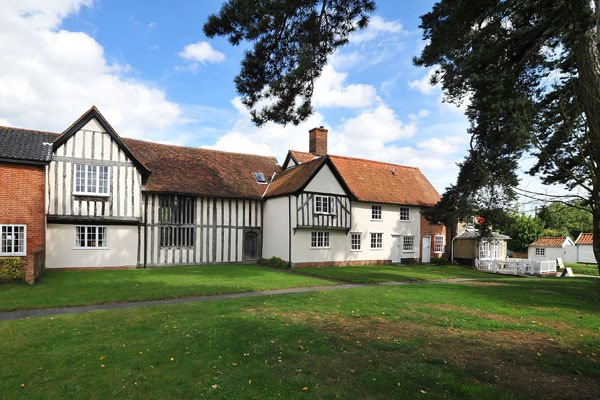
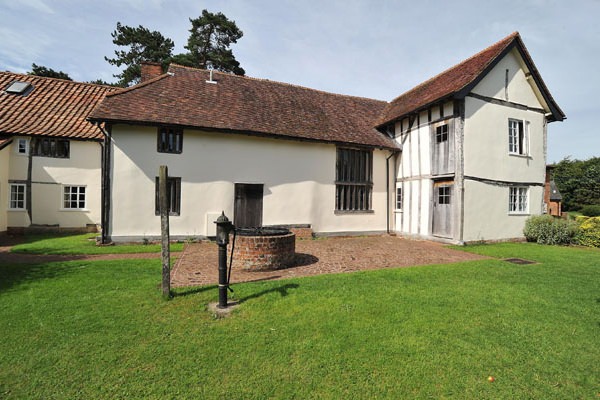
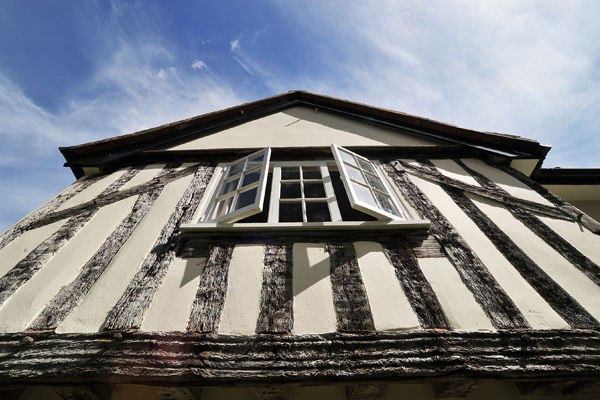
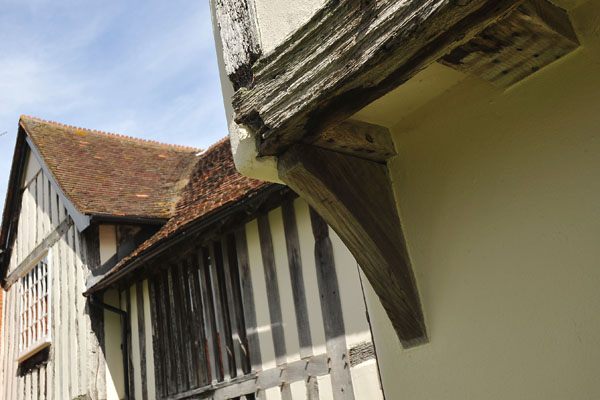

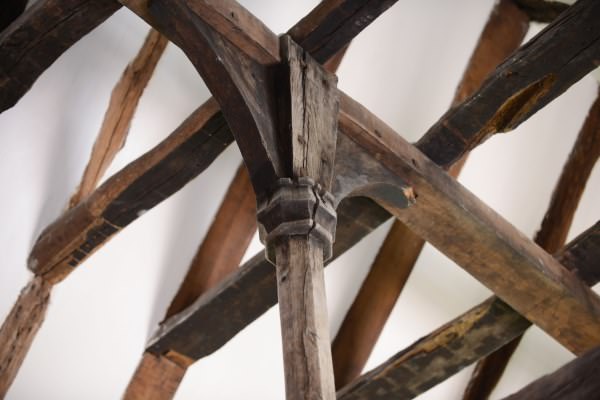
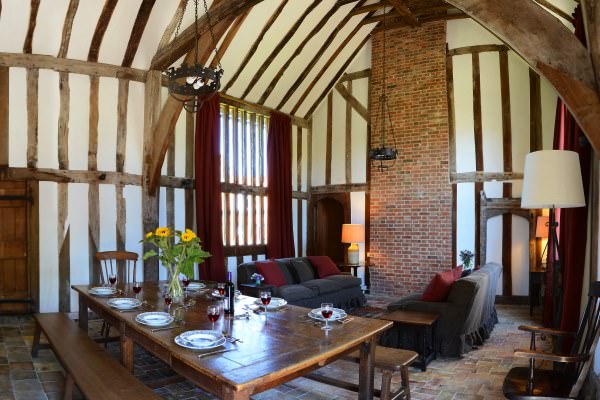
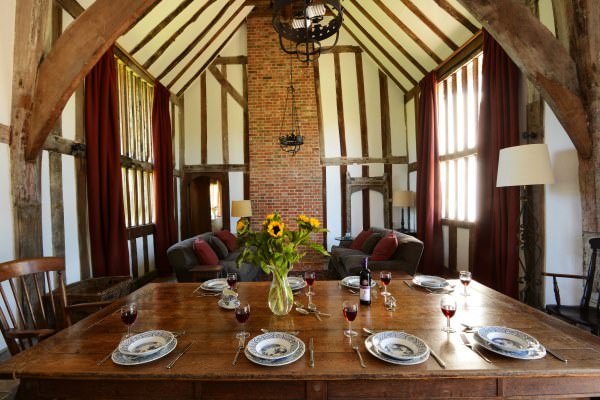
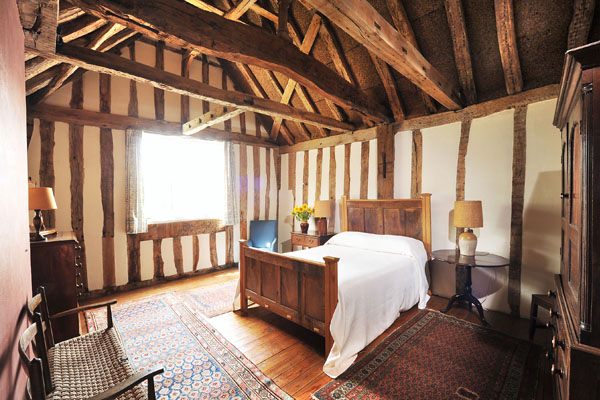
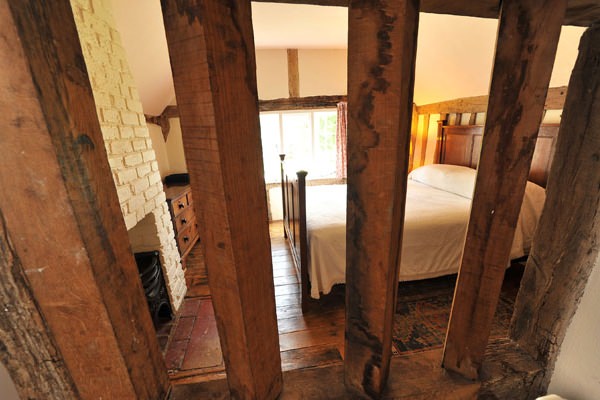
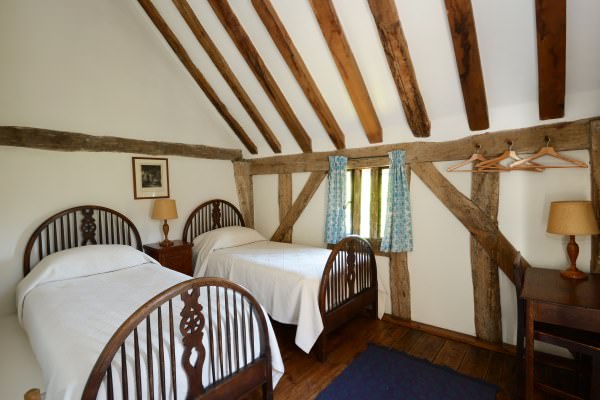
FLOOR PLAN OF NEW INN 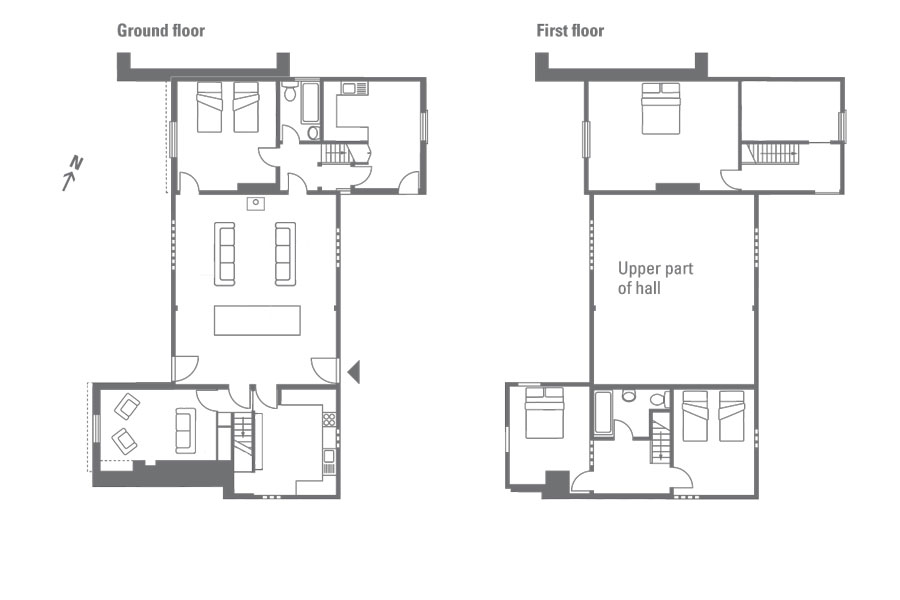
LOCATION OF NEW INN New Inn faces the village green in Peasenhall, a long, open village with a stream running beside the road and excellent small shops full of local produce. The village stages a unique, annual Pea Festival with lots of fun, pea themed events. Peasenhall is a short drive from the Suffolk coast, where you will find Dunwich Heath, a wonderfully peaceful haven of wildlife for you to explore. South of here is the coastal town of Aldeburgh with its shingle beach. Look out for the fishermen's huts, where you can buy freshly caught fish, the Martello Tower and the iconic Scallop sculpture, a tribute to the composer Benjamin Britten, who spent much of his life in this area. Take a trip to the market town of Framlingham, home to a magnificent castle, a one time refuge of Mary Tudor. Combine this with a visit to nearby Saxtead Green Post Mill as an interesting addition to your day out. Don't miss one of the greatest archaeological discoveries of all time at Sutton Hoo, the Anglo-Saxon royal burial site. For more information on things to do during your stay at New Inn, please see our Pinterest page.
SOME HISTORY OF NEW INN In 1464 the Abbot of Sibton conveyed to John Kempe the triangle of land in Peasenhall called The Knowle or Knoll, directly adjoining the King's Highway. On it he built the hall-house which in 1478 was referred to as the New Inn. Until this time inns were a rarity, their role largely being fulfilled by the abbeys and monasteries, but by the 15th century, with the great increase in trade, and therefore in travellers, extra accommodation was needed and all over the country inns were being built to provide this. At first glance it is hard to see how the New Inn differs from the house of, say, a well-to-do merchant. This is because medieval houses, whatever their purpose, followed a similar pattern; there was a central open hall, off one end of which were rooms on two floors for the family (the High End), and off the other, service rooms, pantries and such like (the Low End). But there are two ways in which the New Inn differs from these standard arrangements. Firstly, the accommodation at the High End is larger than usual, forming a wing extending into the courtyard at the back. This was to provide rooms both for the innkeeper's family and for the guests who would have had the use of the fine solar on the first floor. The second way in which the New Inn differs from ordinary houses is in having a large cellar for the brewing and storing of extra ale. But in the New Inn, as elsewhere, the heart of the house was the hall, with its elaborate display of carpentry and carving in the open roof and large windows. Here the guests would gather to drink, eat and warm themselves at the central hearth. The food was prepared for them in a separate kitchen, across the rear courtyard. Round this courtyard were also the stables for travellers' horses and mules, as well as barns and haylofts. In its centre was the well. In the 16th and 17th centuries many alterations were made to the New Inn, the chief of which were the insertion of a floor into the great open space of the hall and the building of brick chimneys in the hall and Low End. Plastered ceilings hid the timbers of open roofspaces. Additions were made at the southern end, which included a shop. The property was divided between different owners, but part of it seems to have continued to be an inn at least until the 18th century. Thereafter further alteration and division disguised the medieval character of the building, but some memory of this lingered on, so that when the derelict cottages into which it had declined were acquired in the 1950s by Blyth Rural District Council, they took some trouble to find out more about them before the demolition that was meant to be their fate. What they discovered resulted in the transfer of the whole row of buildings to the Landmark Trust in 1971. Local tradition gave the New Inn the name of the Wool Hall, a building type honoured in Suffolk; in reality it is something rarer and more interesting, a forerunner of the great coaching inns which are such an important element in the High Streets of our country towns. No building is closer to our hearts and imaginations than the ancient inn and this is one of the earliest of them, looking very much as did in 1470.
THE RESTORATION OF NEW INN The restoration of New Inn was carried out in 1971-2, under the supervision of the architect, John Warren and with advice from Reginald Mason, an expert on timber-framed buildings. The building was in an advanced stage of dereliction and had been declared as unfit for habitation. The first task was to strip away all later accretions, inserted ceilings, plaster off the walls and so on, to see how much of the original frame survived. The frame was found to be largely complete, but suffering badly from subsidence and from carelessly inserted dormer windows, which had weakened its structure and caused the outer walls to lean nearly 18-inches out of true. To solve this, all the rafters had to be taken off and the frame braced back in position. When the roof covering was put back the rather haphazard mixture of plain tiles and pantiles was rationalised, so that now there are plain tiles on the medieval part of the building and pantiles on the later additions. The ridge tiles are copies of two surviving medieval ones. The hall itself was returned it to its 15th-century condition, taking out the inserted floor and any later timbers, and removing a later brick chimney. A brick panel marks where the original frame had been cut away to make room for it. Any new timber that had to be used for repairs - oak was used throughout - was left unfinished, so that it would be quite clear what was old and what was new. Although the windows in the hall had been covered up long ago, the slots for the mullions of the large windows all survived and we were able to put them back as they originally were. The floor tiles (a mix of ‘pamments’ and bricks) in the hall are mostly old. The wood stove echoes the position of the later chimney, and stands close to the place identified in the 1970s restoration as the former position of the open hearth (although such open hall hearths were more typically found in a more central position and we now believe the hearth must always have been nearer the centre of the hall). In the partition between the hall and the low end some panels of original wattle and daub survived, and these were retained. Elsewhere panels of wood-wool were inserted, as the closest modern equivalent to the medieval material, and then plastered. In the high and low ends a less rigorous policy of stripping out was followed. For example in the Solar on the first floor the later ceiling joists have been left in situ, to show how the building was altered. Later fireplaces have also been left and of course most of the doors, though old, are not medieval. Both ends have new staircases. The later additions south and west of the low end were very soundly built, probably in the 17th and 18th centuries, with a charm and character of their own. They have been preserved as a separate cottage. Some other outbuildings were taken down, however, to create the courtyard at the back. In a separate phase of work the adjoining 19th-century brick cottages were renovated and then, a few years later, we bought the land in front of the New Inn, which now, with the closing of the road that ran across it, serves as a village green. Until 2013, we ran New Inn as three separate Landmark units. The open hall, then unheated, was left as a communal space for all to share, and we came to feel that this was a shame. So in 2013, the hall has been fully insulated and, combining the best of traditional and modern heating methods, we installed both a woodstove and underfloor heating, exploiting renewable energy via an air source heat pump. To maximise the hall’s use, two of the smaller units (formerly known as High End and Low End) have been combined to make today’s single Landmark for eight. New Inn’s tradition of hospitality is now set to continue into the 21st century.
For Rob's itinerary go to: http://www.rs41.org/Trips/UK%20May16.htm